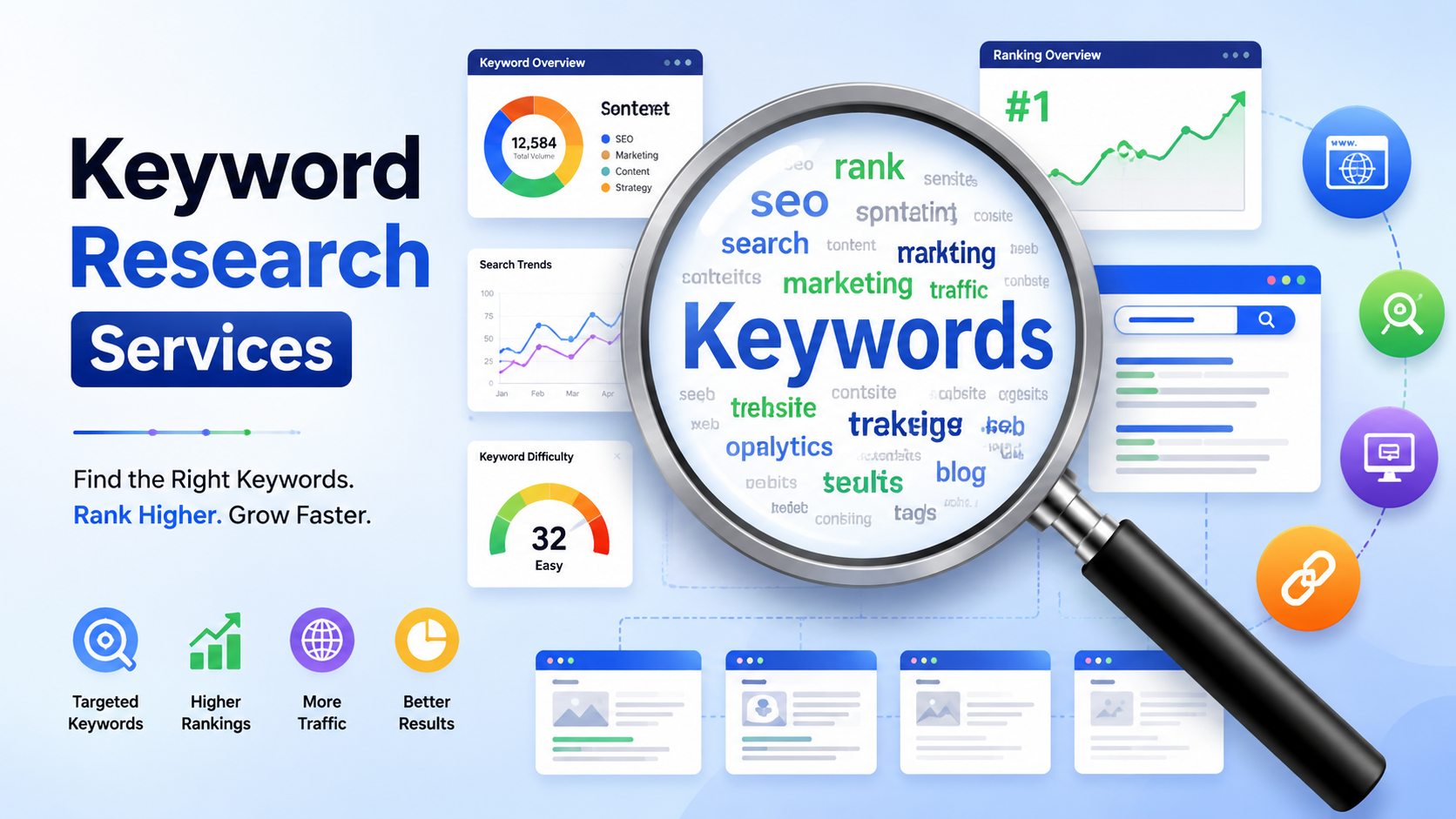
You wrote a great blog post. You shared it on social media. You waited. And… nothing happened. No traffic, no clicks, no new customers. This happens to thousands of website owners every single day, and most of the time, the problem traces back to one thing: nobody did proper keyword research first. Good keyword research services fix this problem at the root. They help you understand exactly what your customers type into Google before they ever land on your site. Once you know that, everything else about your content strategy gets easier.
In this article, we will break down what this kind of research actually does, why it matters so much, and how to pick the right team for your business. No jargon, no fluff. Just practical, honest information you can use today.
Why Search Terms Decide Whether Anyone Finds You
Think about the last time you searched for something on Google. You typed a few words, hit enter, and clicked on one of the first results. You probably never scrolled to page two. Studies show that the first page of Google gets over 90% of all search clicks, and most of that traffic goes to the top three spots. This is why picking the right words matters so much. If your website talks about “footwear” but everyone searches for “running shoes for flat feet,” you are speaking a different language than your customers. That mismatch costs businesses real money every day.
Professional keyword research services solve this gap. They study real search data, not guesswork, to find out what people actually type. Then they help you build content around those exact phrases.
What Keyword Research Services Actually Do
A lot of people think keyword research just means picking a few popular words and stuffing them into a page. That is old thinking, and it does not work anymore. Search engines are smarter now, and so is the process behind it.
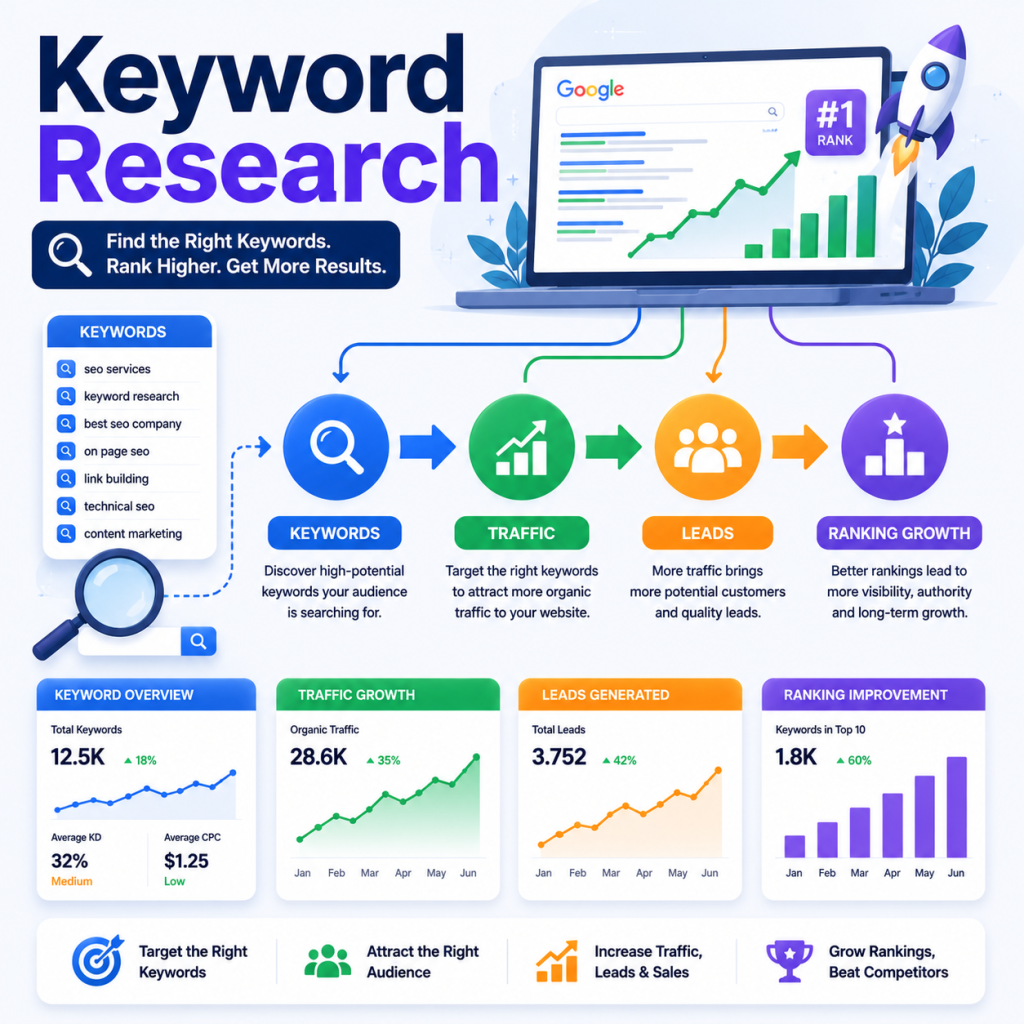
Finding the Right Search Terms
The first job of any keyword research team is discovery. They use tools like Google Keyword Planner, Ahrefs, or SEMrush to pull lists of phrases related to your business. But the real skill is knowing which of those hundreds of phrases are actually worth chasing.
For example, a bakery might discover that “gluten free birthday cake near me” gets searched way more often in their city than “custom cakes.” That single insight can reshape an entire content plan. This is the kind of detail that separates guesswork from strategy.
Checking Competition and Difficulty
Not every keyword is worth going after. Some terms are so competitive that even big brands struggle to rank for them. A solid research process checks how hard each keyword will be to rank for, based on who already holds those top spots.
This step saves you months of wasted effort. Instead of fighting giant competitors for a word like “shoes,” you might target “affordable waterproof hiking shoes for wide feet” instead. Smaller phrases like this, often called long-tail keywords, bring in fewer searches but far less competition and often better buyers.
Spotting Search Intent
Here is something many beginners miss. Two people can type similar words but want totally different things. Someone searching “best coffee maker” wants reviews. Someone searching “buy coffee maker” wants to purchase one right now.
Understanding this difference, known as search intent, changes what kind of page you should build. A blog post might work for the first search. A product page works better for the second. Getting this wrong means you attract visitors who leave without doing anything useful for your business.
Signs Your Business Needs a Professional Keyword Strategy
Maybe you are wondering if you really need help with this, or if you can just wing it yourself. Here are a few honest signs that it is time to bring in some expertise.
Your traffic has stayed flat for months, even though you keep publishing content. Your blog posts get views but almost no sales or sign-ups. You are not sure what your competitors are ranking for, or why they show up above you. Any of these sound familiar? If so, working with keyword research services could turn things around fairly quickly.
Small business owners often try to do this alone at first, and that makes sense when budgets are tight. But keyword research takes time, the right tools, and a fair amount of practice to get right. Bringing in outside help often pays for itself within a few months through better traffic and more leads.
How Keyword Research Services Boost Your Rankings
Let’s talk numbers for a second, because that is what really matters to most business owners. When done well, keyword research does more than just bring in visitors. It brings in the right visitors, the ones actually ready to buy or sign up.
Here is a simple comparison of what typically happens with and without proper research:
| Factor | Without Keyword Research | With Professional Keyword Research Services |
|---|---|---|
| Content direction | Based on guesses | Based on real search data |
| Traffic quality | Random, often low intent | Targeted, higher intent |
| Time to rank | Slower, more trial and error | Faster, more focused effort |
| Competition level | Often too high | Balanced and realistic |
| Return on investment | Hard to predict | Easier to track and improve |
As the table shows, the gap between guessing and researching is huge. A well-planned keyword strategy gives every blog post and page a clear purpose. Nothing gets published just for the sake of publishing.
What to Look for in a Good Keyword Research Provider
Not all agencies or freelancers offer the same quality of work. Some just hand you a spreadsheet of random words and call it a day. Here is what actually separates the good providers from the average ones.
First, ask about their process. A good provider will explain how they find keywords, not just tell you they will “handle it.” They should mention search volume, competition, and intent as part of their normal workflow. If they cannot explain their method simply, that is a red flag.
Second, check if they customize their research for your industry. A dentist’s office and a software company need completely different keyword strategies. Generic, one-size-fits-all lists rarely bring real results.
Third, look for ongoing support rather than a one-time report. Search trends shift throughout the year, and what worked six months ago might not work today. The best providers treat this as an ongoing process, not a single task to check off a list.
Common Mistakes Businesses Make Without Proper Keyword Planning
Let’s be honest about the mistakes that happen when businesses skip this step entirely. Learning from these can save you a lot of wasted time and money.

Chasing only high-volume keywords. Big numbers look exciting, but they usually come with brutal competition. Smaller, specific phrases often bring better results, especially for newer websites.
Ignoring local search terms. If you run a physical store or local service, phrases like “near me” or your city name matter a lot. Skipping local research means missing out on customers who are ready to visit today.
Copying competitor keywords blindly. Just because a competitor ranks for something does not mean it fits your business. Their audience, budget, and history might be totally different from yours.
Never updating the keyword list. Search habits change with seasons, trends, and even world events. A list built two years ago probably needs a fresh look.
Writing content first, then trying to fit in keywords. This backwards approach almost always feels forced and reads awkwardly. Research should always come before writing, not after.
How Much Do Keyword Research Services Cost?
Pricing varies quite a bit depending on who you hire and how deep the research goes. Freelancers might charge anywhere from fifty to a few hundred dollars for a basic keyword list. Full agencies offering this kind of work often charge monthly, ranging from a few hundred to a few thousand dollars, depending on your industry and competition.
It helps to think of this as an investment rather than an expense. Good research guides every future piece of content you create, so its value stacks up over time. A cheap, rushed keyword list might save money now but cost you far more in wasted content later.
Before hiring anyone, ask for examples of past work or case studies. A trustworthy provider will happily show you real results from other clients. If someone hesitates to share proof, take that as a warning sign.
Frequently Asked Questions
How long does keyword research usually take?
A basic keyword research project can take anywhere from a few days to two weeks, depending on the size of your website. Larger businesses with many product categories often need more time for thorough research. Ongoing research, however, never really stops since trends keep changing.
Can I do keyword research myself without any tools?
You can start with free tools like Google’s autocomplete feature or the “People also ask” section on search results. These give basic ideas but lack the deeper data that paid tools provide. For serious growth, paid tools or professional help usually work much better.
How often should I update my keyword strategy?
Most experts suggest reviewing your keyword list every three to six months at minimum. Seasonal businesses may need to check more often, especially around holidays or busy periods. Regular reviews help you catch new trends before your competitors do.
Do keyword research services work for small local businesses?
Yes, and honestly, they can make an even bigger difference for local businesses than large ones. Local keyword research helps you show up when nearby customers search for your exact services. This often leads to faster, more noticeable results compared to broader national campaigns.
What is the difference between short-tail and long-tail keywords?
Short-tail keywords are brief, broad phrases like “shoes” that get high search volume but face tough competition. Long-tail keywords are longer, more specific phrases like “waterproof running shoes for women” with less competition. Long-tail keywords often convert better because they match exactly what the searcher wants.
Wrapping It All Up
Finding the right words matters more than most people realize. It shapes everything from your blog topics to your product pages to your ad campaigns. Without this foundation, even the best-written content can sit invisible on page five of Google. Working with skilled keyword research services takes the guesswork out of your content strategy. You get real data instead of assumptions, and that data points you toward the customers who are actually searching for what you offer. Whether you handle this in-house or bring in outside help, the goal stays the same: speak the exact language your customers are already using.
Start small if you need to. Pick a handful of keywords, track how they perform, and build from there. Over time, this simple habit can completely change how much traffic and business your website brings in.