 By mason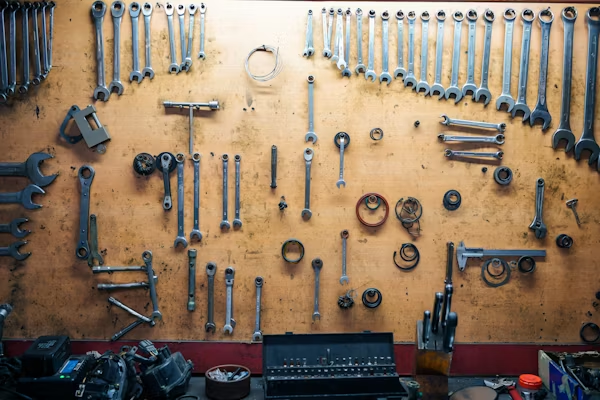
Introduction
In a world where efficiency, portability, and multi-functionality are rapidly becoming the gold standard, the concept of a single tool that can do it all is no longer just a dream—it’s a growing reality. Enter the Jackerman, a multi-purpose tool that boldly claims to replace your entire toolbox. Compact yet powerful, simple yet sophisticated, this tool has become a talking point among DIYers, campers, professionals, and even casual homeowners.
But the question remains: Can the Jackerman truly stand up against a full set of traditional tools? Is it just clever marketing, or does it actually deliver enough utility to earn its place as your go-to gadget for daily tasks and emergencies alike?
In this in-depth article, we’ll examine what makes the Jackerman unique, compare it to traditional tools in function and performance, and explore real-world use cases to find out if this multi-tool can truly dethrone the classic toolbox.
What Is the Jackerman?
The Jackerman is a compact, multi-functional tool designed to perform a variety of essential tasks using integrated components. Its core features typically include a:
- Knife
- Hammer
- Saw
- Screwdriver
- Bottle opener
- Mini wrench
- Pliers
These components are all built into a single, durable unit made of stainless steel or titanium, designed to be both portable and rugged. The tool also incorporates modern safety mechanisms, smart locking systems, and ergonomic grip enhancements.
The Promise: One Tool to Rule Them All
Jackerman positions itself as a toolbox alternative, aimed at reducing the clutter of multiple tools and replacing them with a lightweight device that fits in your pocket or bag. The idea is simple: rather than carrying a full array of screwdrivers, hammers, and cutting instruments, you carry just one compact unit that can do it all.
This concept appeals especially to:
- Campers and survivalists
- Apartment dwellers with limited storage
- Travelers needing a compact utility tool
- Professionals requiring a backup option on the go
The Traditional Toolbox: Tried and True
For decades, the traditional toolbox has been the cornerstone of home and professional repair work. A standard kit might include:
- Claw hammer
- Utility knife
- Various screwdrivers (Phillips, flathead, Torx)
- Hand saw
- Measuring tape
- Adjustable wrench
- Pliers
- Drill bits and driver heads
Each tool is specialized for a specific task and offers maximum effectiveness in its category. While bulky and space-consuming, traditional toolboxes are considered the gold standard for precision and durability.
Comparing Jackerman to Traditional Tools
Functionality
Traditional tools tend to perform better in individual tasks. For example:
- A full-sized saw cuts wood faster than a mini saw attachment
- A heavy-duty hammer provides more driving force
- Dedicated screwdrivers offer better torque
The Jackerman, on the other hand, offers versatility over specialization. While it may not perform each task as effectively as a dedicated tool, it’s capable of doing all of them well enough in most everyday scenarios.
Portability
This is where Jackerman shines. A traditional toolbox can weigh 15–30 pounds and occupy a sizable space. The Jackerman, by contrast, is:
- Lightweight (often under 1.5 lbs)
- Palm-sized
- Easily clipped onto a belt or bag
For people who value space-saving convenience, the Jackerman clearly takes the lead.
Build and Durability
Traditional tools benefit from their singular construction—each is built solely for one purpose. This makes them:
- Stronger
- Longer-lasting with less wear and tear
- Easier to repair or replace individually
The Jackerman is built to be durable, often made from aerospace-grade metals, but with moving parts and compact designs comes increased potential for mechanical wear over time.
Real-World Use Cases
Household Repairs
For quick fixes like tightening screws, minor hammering, opening packages, or sawing a bit of wood, the Jackerman gets the job done efficiently. Most casual users don’t require professional-level performance for home repairs, making Jackerman a convenient all-in-one solution.
Outdoor Use
Campers, hikers, and survivalists have praised the Jackerman for:
- Cutting rope and branches
- Driving tent pegs
- Cooking prep
- Emergency shelter construction
Its versatility in remote settings makes it invaluable, especially where weight and space limitations matter.
Emergencies
In car breakdowns or power outages, having a Jackerman in the glove box or go-bag provides:
- Quick access to light tools
- Basic cutting and hammering capabilities
- Minor repair functionality
For these “just-in-case” situations, Jackerman is reliable and accessible.
Where Jackerman Falls Short
While the Jackerman excels in general-purpose use, it’s not without its limitations.
Heavy-Duty Jobs
Tasks requiring brute strength—like breaking concrete, deep woodcutting, or precision electrical work—are beyond the capabilities of most multi-tools, including the Jackerman.
Continuous Use
Ergonomics in multi-tools can’t match that of full-sized tools for extended tasks. A traditional screwdriver, for example, provides better grip and torque for prolonged work than the Jackerman’s fold-out option.
Tool Replacement Limitations
The Jackerman doesn’t completely eliminate the need for other tools in specialized environments. It’s an ideal supplement, not necessarily a full replacement, for contractors or tradespeople.
User Testimonials
Reddit and YouTube communities are filled with reviews and testimonials like:
- “Perfect for my RV—takes care of 90% of minor repairs.”
- “Jackerman replaced my camping toolbox completely.”
- “It’s good for what it does, but I still rely on my full toolbox for serious work.”
These reviews highlight the tool’s real-world viability, especially for light to moderate tasks.
Cost Comparison
Traditional tools, when purchased individually, can cost anywhere between $100–$300 for a full set. A Jackerman typically costs between $50–$120, depending on materials and features.
While the upfront cost may seem high for a single tool, its all-in-one value makes it cost-effective, particularly for casual users and travelers.
Safety and Innovation
Jackerman includes:
- Safety lock mechanisms to prevent accidental unfolding
- Finger protection guards
- Non-slip grip textures
These features enhance user safety, a crucial concern with multi-tools that contain sharp edges and swing-out parts.
Customization and Accessories
Some Jackerman models allow for:
- Tool swapping
- Add-on modules
- Color customization
- Laser engraving
These personalization options cater to enthusiasts who value both form and function.
Travel Considerations
Unlike a full toolbox, which can’t be carried on flights or packed easily into luggage, the Jackerman:
- Can be TSA-friendly (check the model)
- Fits in a glove box, drawer, or backpack
- Doesn’t require much packing space
For digital nomads, hikers, and remote workers, this is a significant advantage.
Community and Culture
Online communities surrounding the Jackerman are active and growing. Users:
- Share mods and upgrades
- Post survival stories
- Create memes and fan art
- Crowdsource usage hacks
This sense of belonging and shared discovery is missing from traditional tools and adds a layer of connection between users.
Is Jackerman a Toolbox Replacement?
The answer depends on your needs:
Yes, if you are:
- A casual user or homeowner
- A camper, traveler, or hiker
- A student or someone living in small spaces
- A tech enthusiast who values innovation
No, if you are:
- A professional contractor
- Someone handling specialized, heavy-duty tasks
- Performing frequent large-scale repairs
Final Verdict: A Hybrid Future
The Jackerman doesn’t entirely replace traditional tools—yet. But for many, it comes surprisingly close. It simplifies small jobs, travels easily, and offers enough strength to be more than just a gimmick. It’s a bold challenger in a field of established workhorses, carving out its own niche through smart design and practical performance.
Instead of asking “Can it replace everything?” perhaps a better question is: “Can it replace enough?” And for millions of users worldwide, the answer is a resounding yes. The Jackerman isn’t the end of the toolbox—it’s the evolution of it.